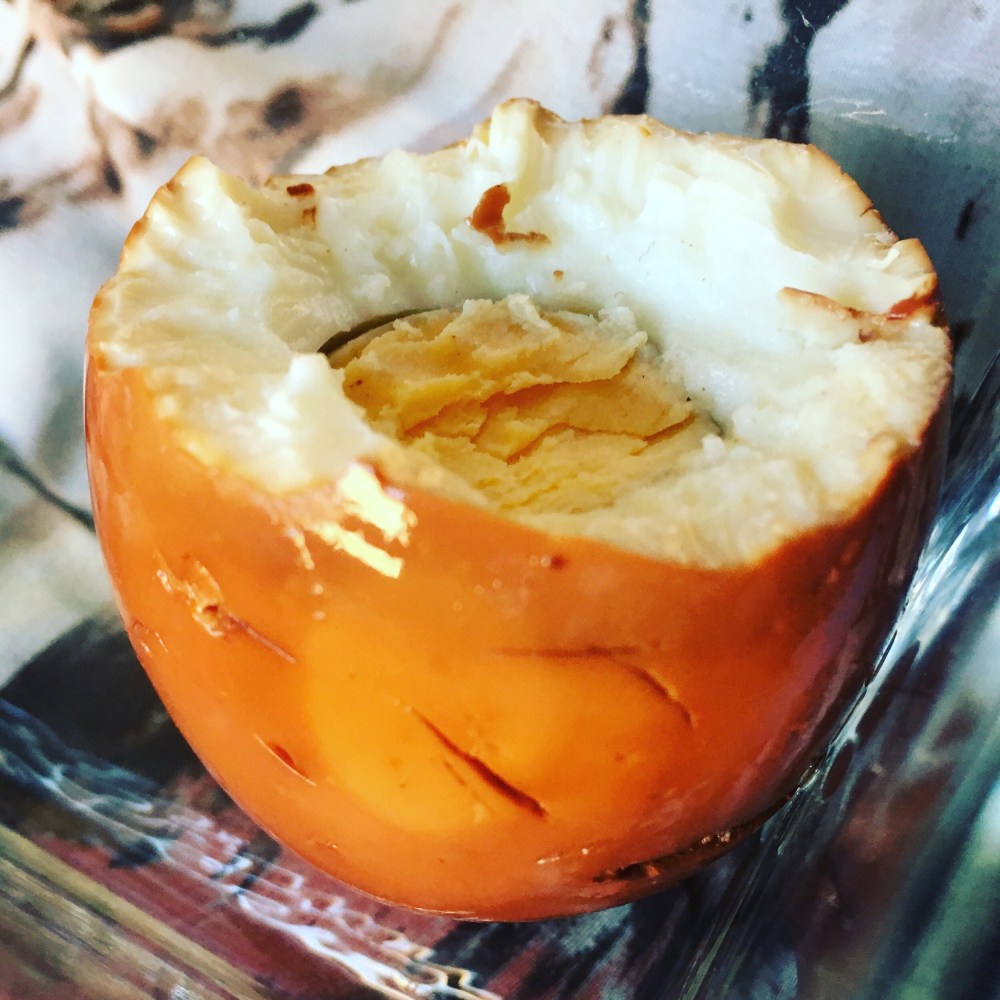
 Tea egg after soaking for 24 hours
From hearing these raved-about on YouTube shows like BuzzFeed’s Worth It, I thought tea eggs or Cha Ye Dan , would be super amazing, so I thought i’d give it a try!
You can get flavored eggs all around the world. Tea eggs originally come from China. In Switzerland you can get plain hard-boiled eggs with a little shaker of seasoning 🧂. The UK has Scotch eggs, deviled eggs AND pickled eggs. The deviled eggs being a bit of a cheat in this list, as you take out the yoke and mix it with mayo, parsley and lemon and return to the egg white to resemble the original egg. And there is the Japanese Ramen Eggs or Ajitsuke Tamago, which I am yet to try!
Any-who, here is a recipe for Chinese tea eggs, ala me.
With some research I devised a recipe based on everyday household ingredients:
One English breakfast tea bag
One rooibos tea bag
Peppercorns
Cinnamon
Crystallized ginger (it’s great for travel sickness (dizziness), stomachache and it tastes bloody good, especially covered in chocolate 🍫!)
Soy sauce
I bought the ingredients to the boil with a four to one ratio of water to soy sauce. Then turned off the heat and added the already hard-boiled and pealed eggs to the mixture, and covered with a lid. I know cracking the egg’s shell to get a nice marbled look is the norm, but I wanted to see the cross-section of the egg after soaking (see the picture at the top of this post).
I had one egg after half an hour…yum!
I tried the other egg after soaking it in the liquid for 24 hours and for my tastes was way too salty. So if you want to store it don’t do it in the liquid or lessen the soy sauce. But that’s personal taste.
Eggs are a great source of protein, and are an ideal snack for the dieting masses, despite their saturated fat level. Their ability to fill you up is better than endlessly snacking on low-fat crackers.
In summary, tea eggs are a great way to spice-up your high-protein afternoon snack!

 Nicole Reynolds